Clinical / Healthcare · Rapid Prototyping · AI-Assisted Design · Product Vision
Caris Life Sciences · Provider & Patient Portal
Rapidly defining and prototyping a new provider and patient portal for Caris Detect, moving from an initial request to a working product vision within days.
Overview
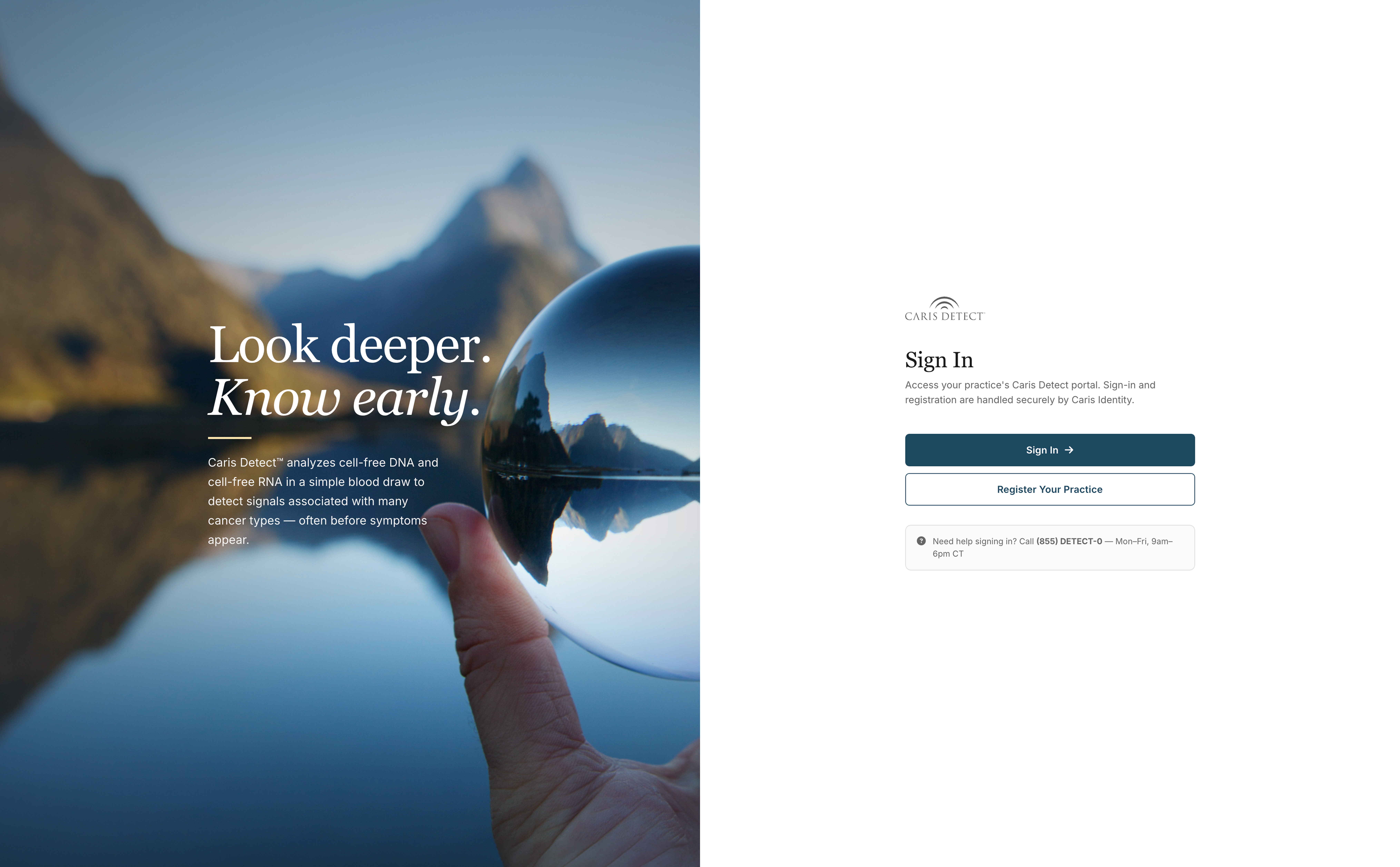
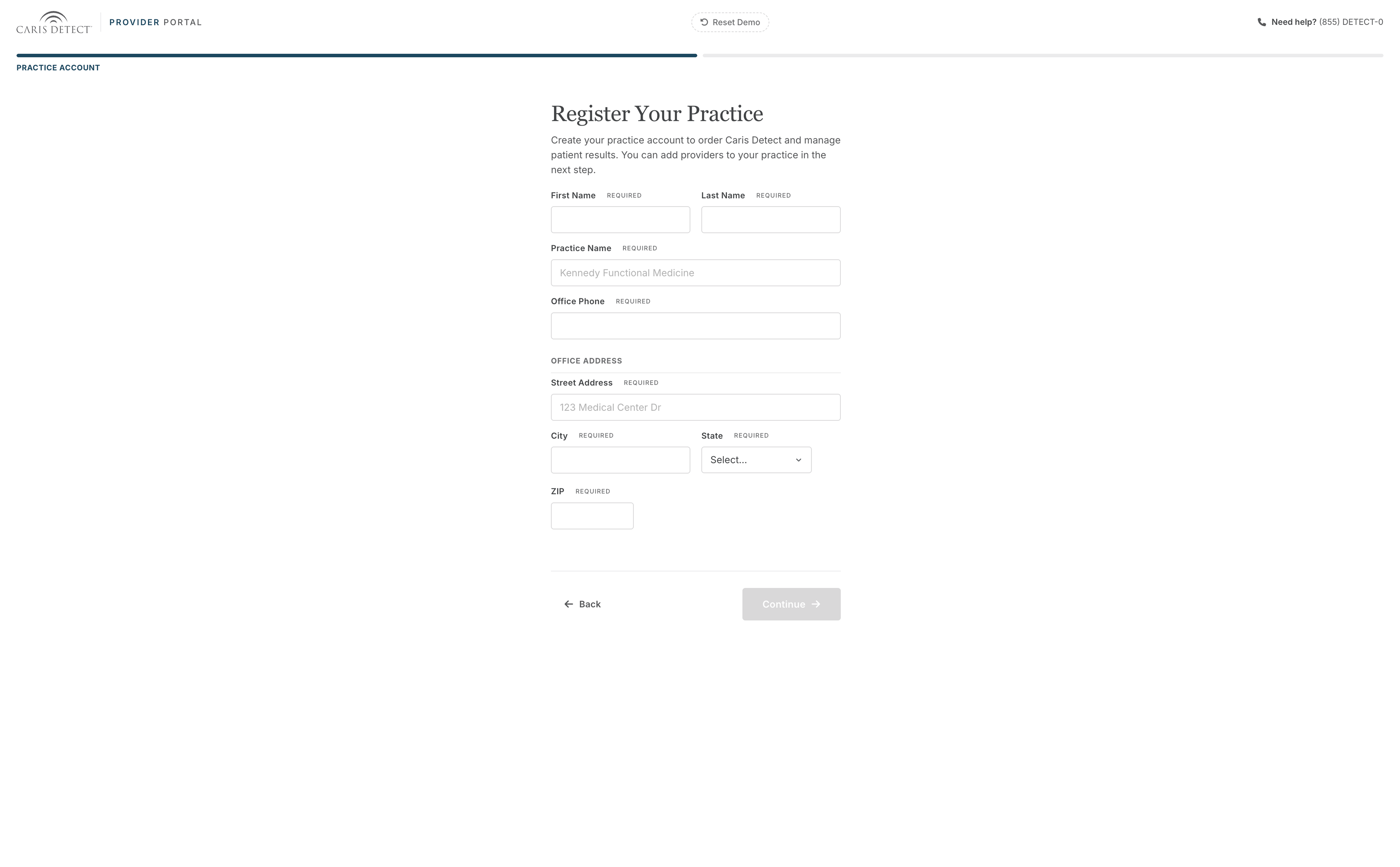
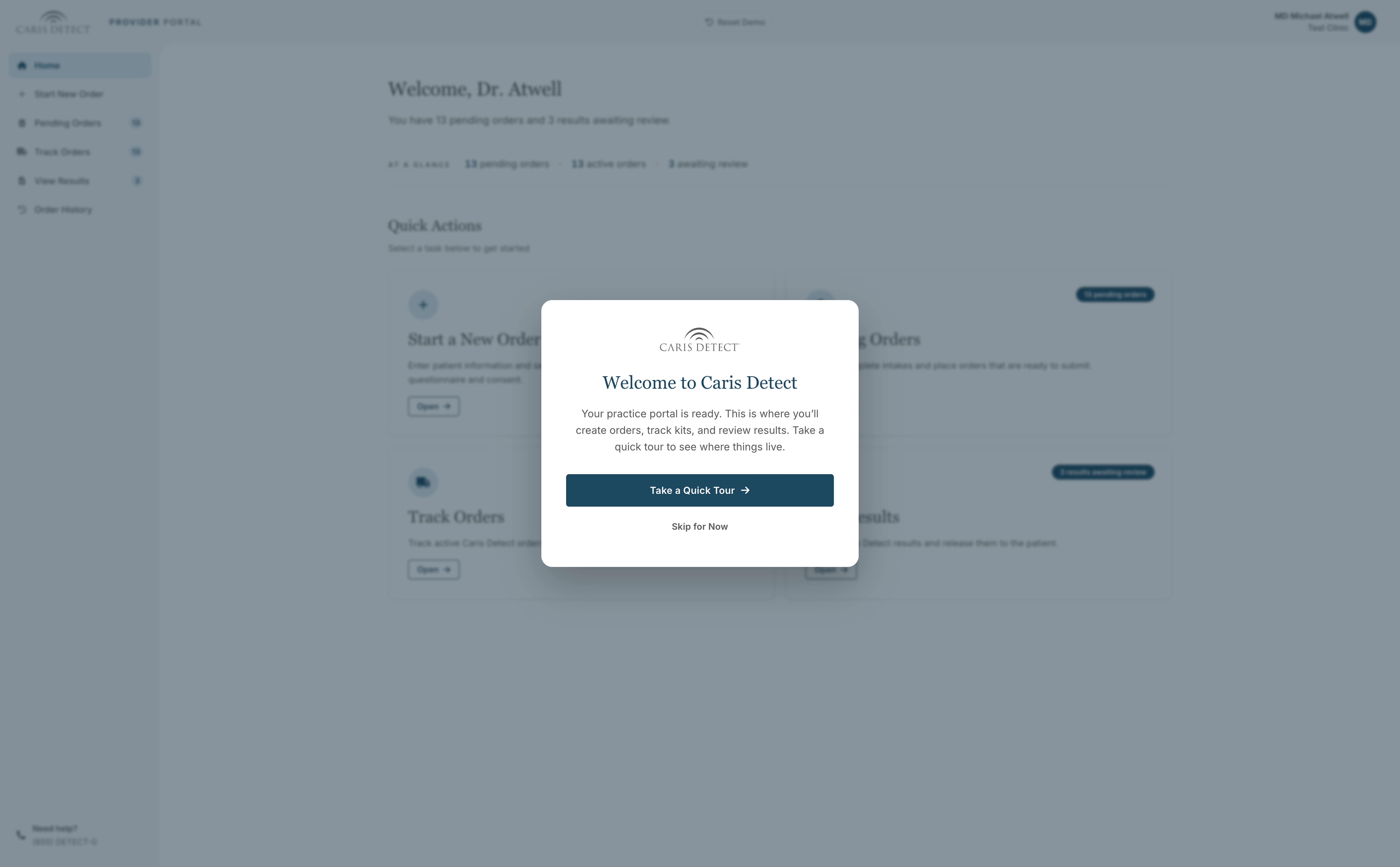
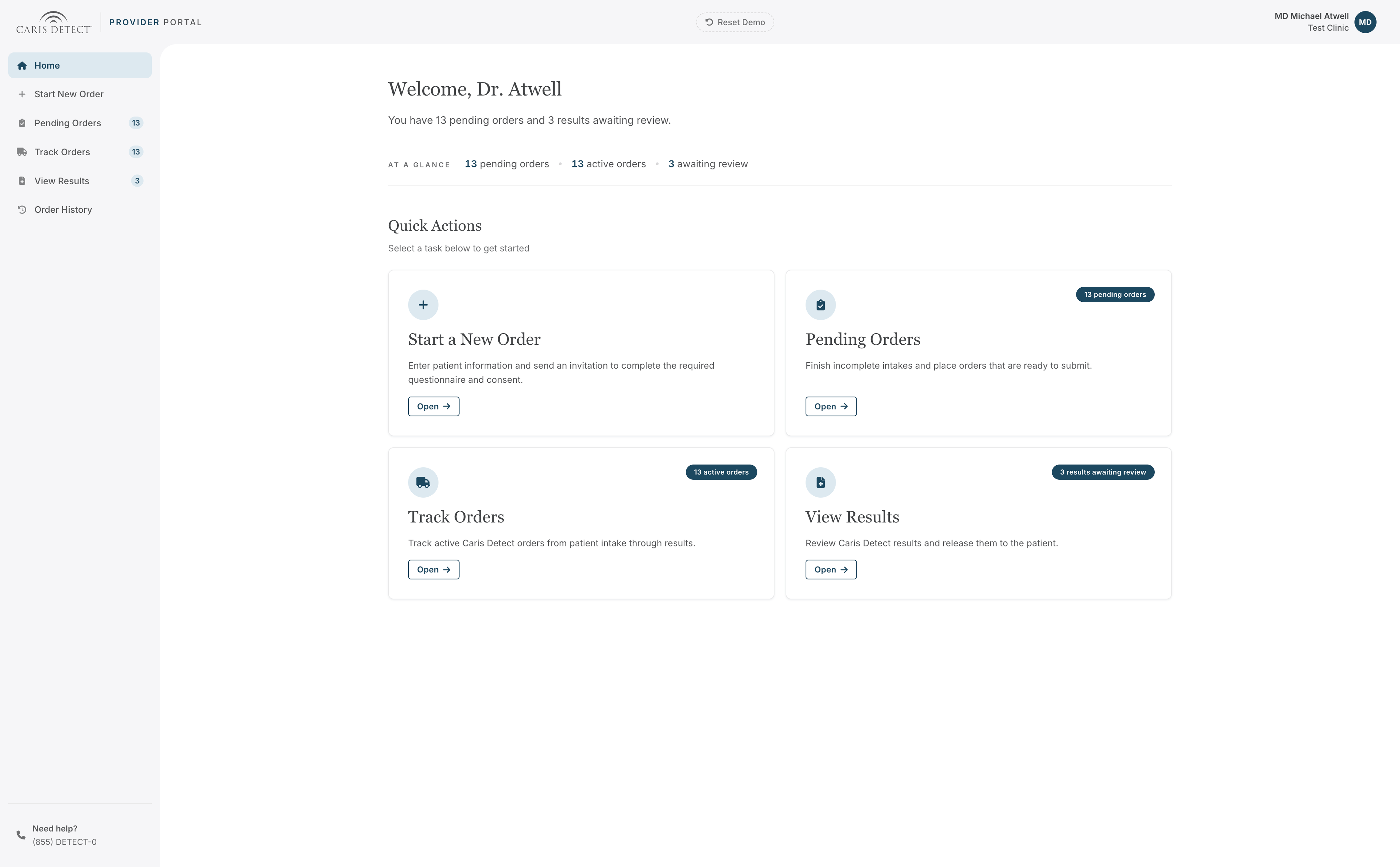
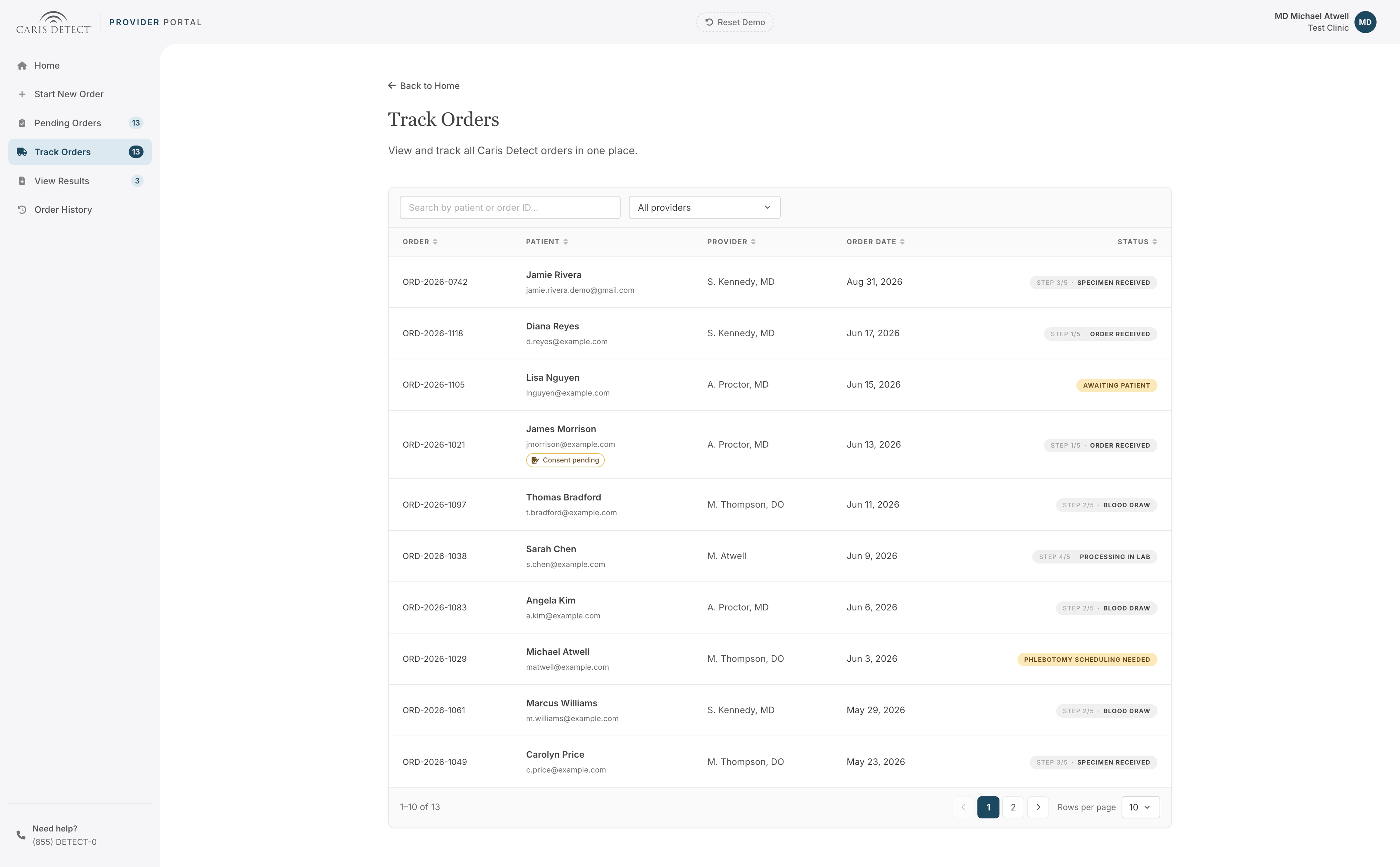
Caris was preparing to launch Caris Detect, an early cancer detection product with providers and clinics already preparing to use it. The team needed a new digital experience that allowed providers to place orders and review results, while also giving patients a way to access their own results.
The request came in on a Monday with a working prototype needed by Friday. At the time, Allata had not yet been awarded the implementation work.
My Role
I was responsible for quickly turning the initial product requirements into a tangible experience. Using Caris brand guidance, existing product context, and direct stakeholder input, I designed and built a working prototype without relying on a traditional Figma-first process.
I used Cursor and Claude to move directly into a coded prototype, with an initial version ready by Wednesday and additional iteration through the end of the week. That allowed stakeholders to react to a real experience much earlier than they would have through a traditional design process.
After the prototype helped establish the vision for the product, Allata was selected to build the application. I have continued on the engagement as UX lead, helping gather requirements, maintain the visual direction, and ensure the implementation stays aligned with the original product vision.
Approach
Speed was the central constraint, so I changed the way I worked. Instead of spending the week creating static screens and then handing them off for development, I moved directly into a high-fidelity coded prototype.
The prototype gave stakeholders something they could click through, react to, and validate almost immediately. It also created a more direct bridge into development because parts of the front-end code and interaction patterns could be reused by the engineering team.
That shortened the gap between design and implementation and helped the final product stay much closer to the original design intent.
Outcome
The prototype was completed within the week and helped Caris align around the new provider and patient experience. It also contributed to Allata winning the implementation work for the product.
The prototype has continued to provide value during development. Because the experience was built in working code rather than only static design files, developers have been able to use it as a stronger reference point for the front end, resulting in an implementation that stays closer to the original design vision.