Laboratory Operations · Workflow Design · UX Leadership · Enterprise Systems
Molecular Testing Labs
Rebuilding an unstable legacy lab system from the ground up, with a digital experience designed to mirror the real physical workflows technicians use every day.
Overview
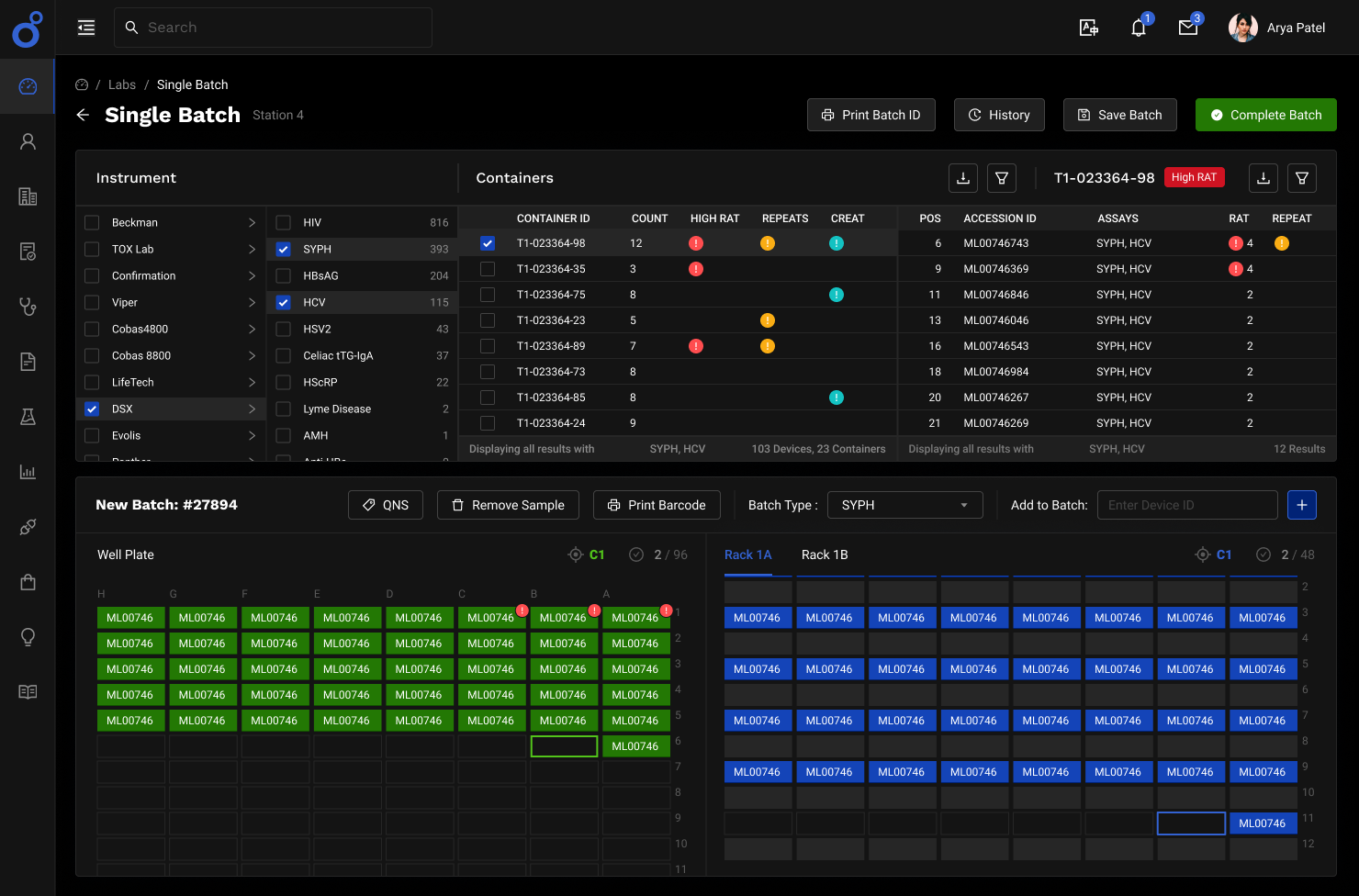
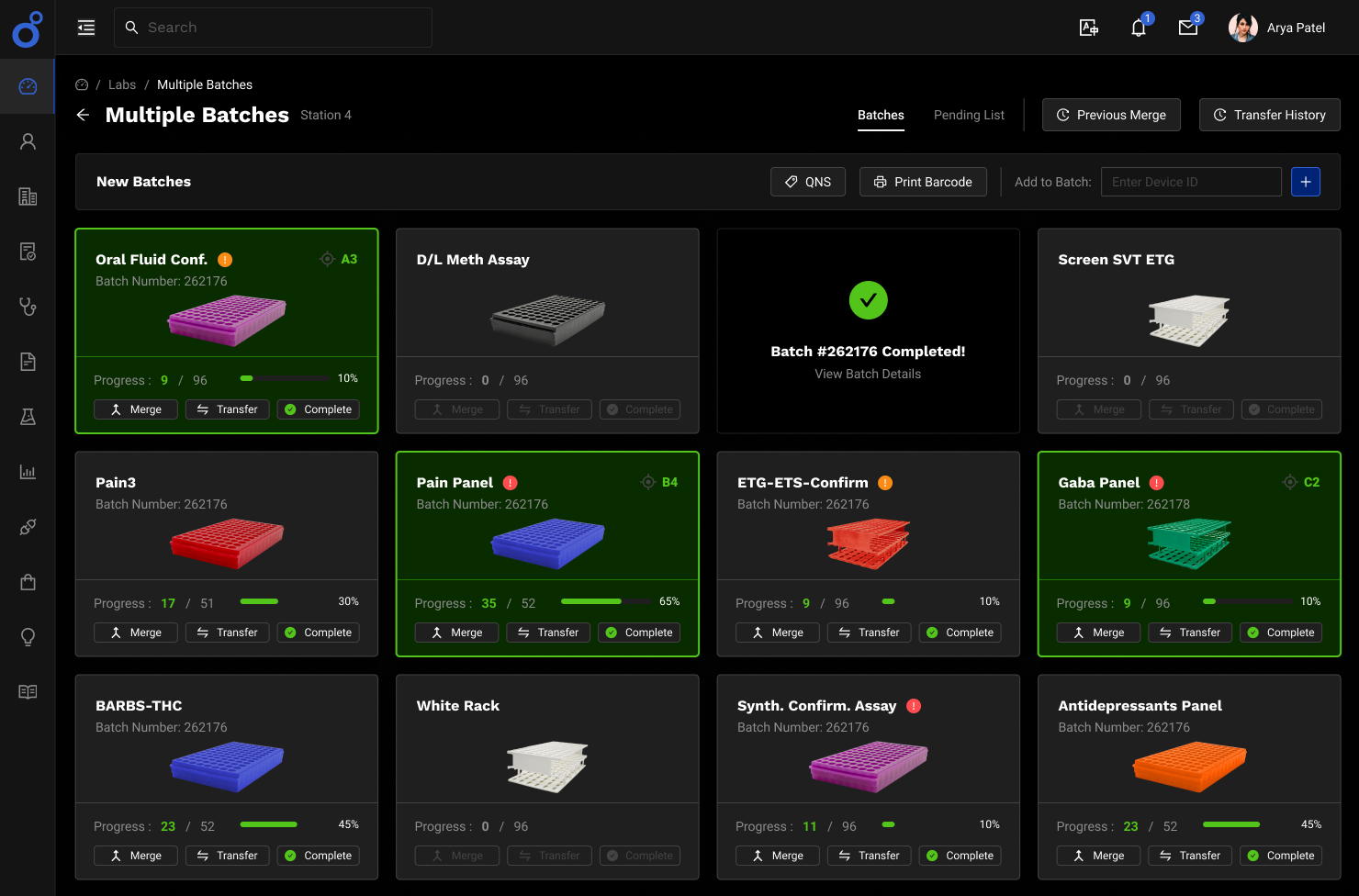
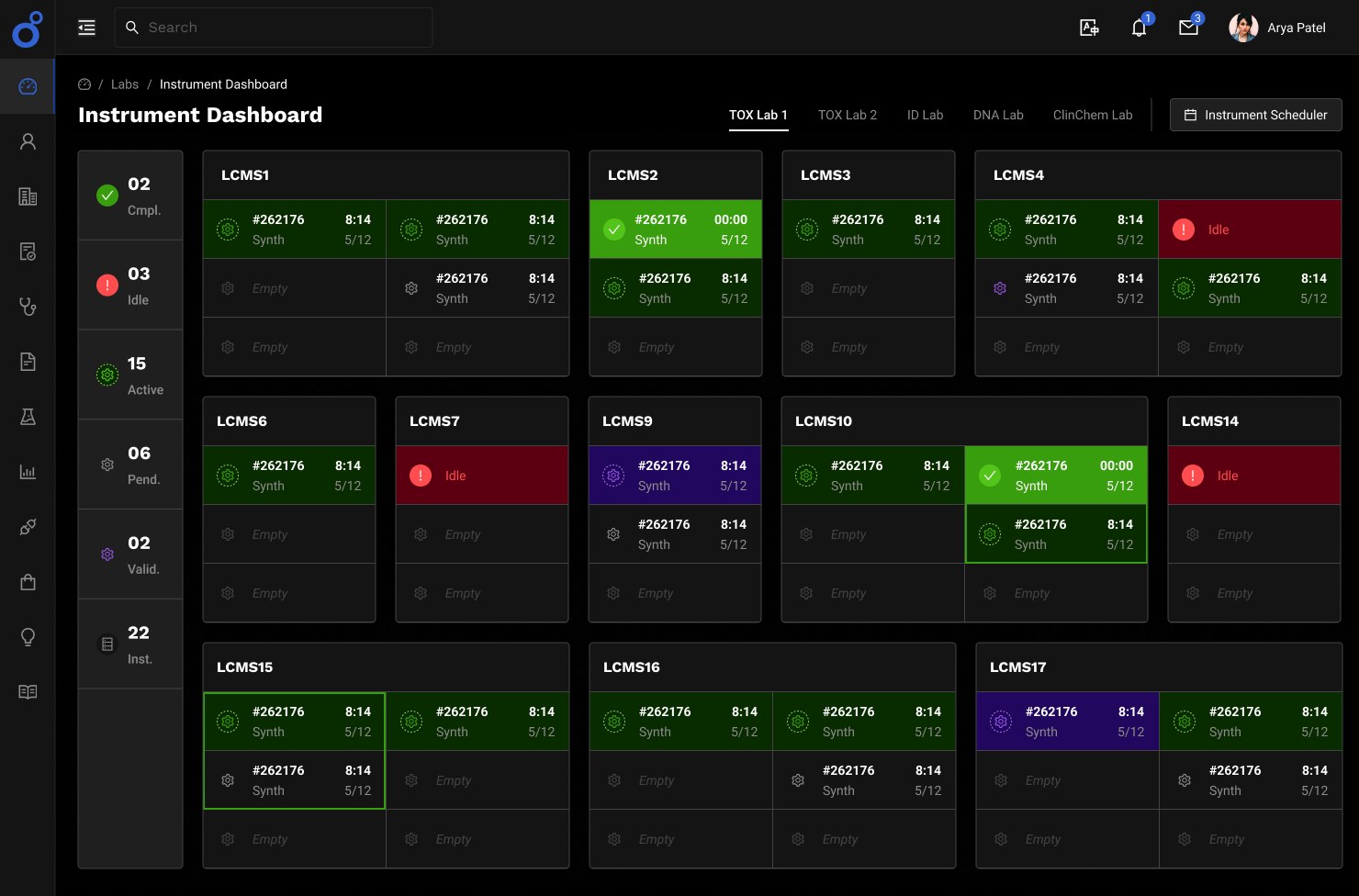
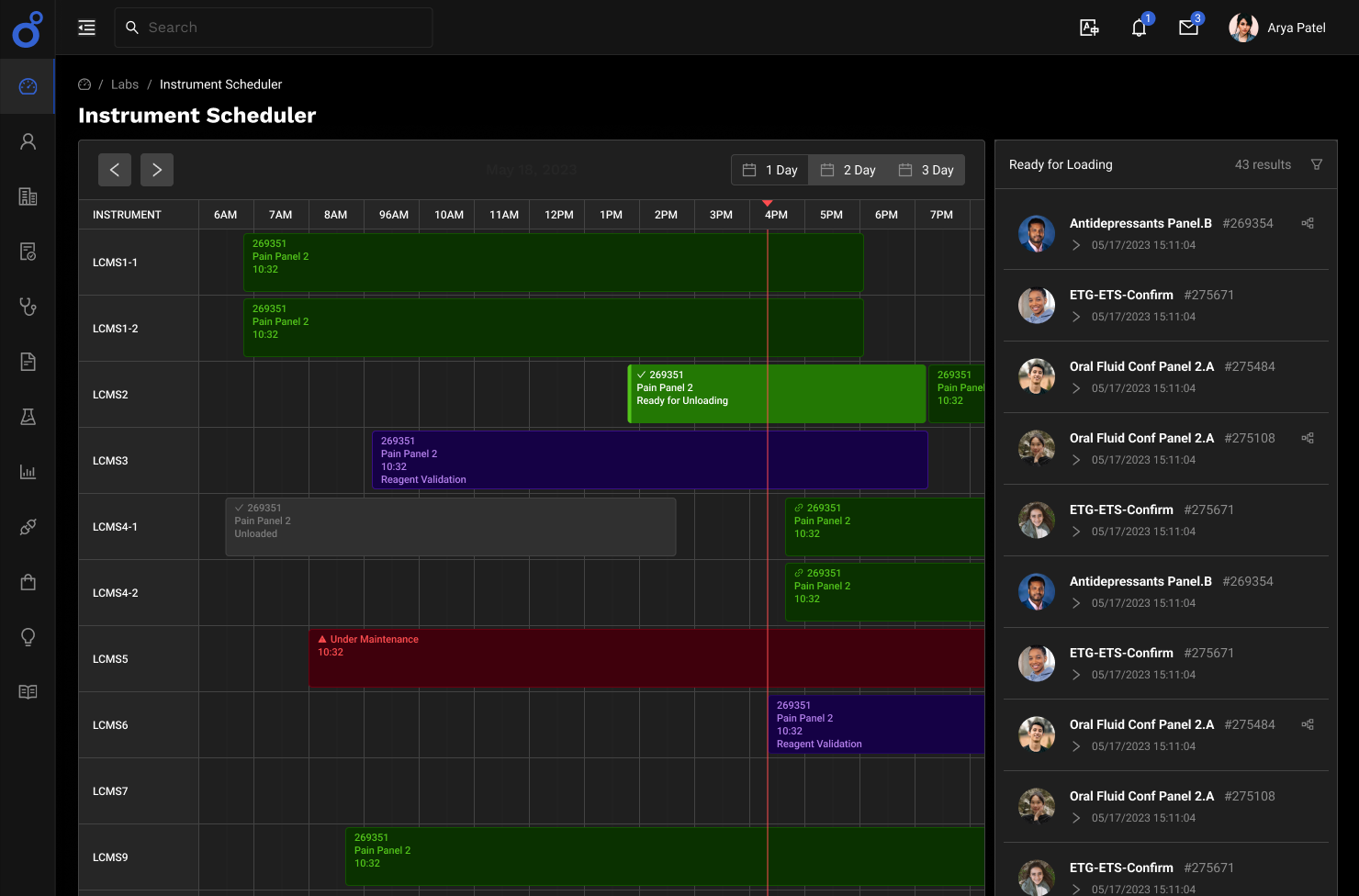
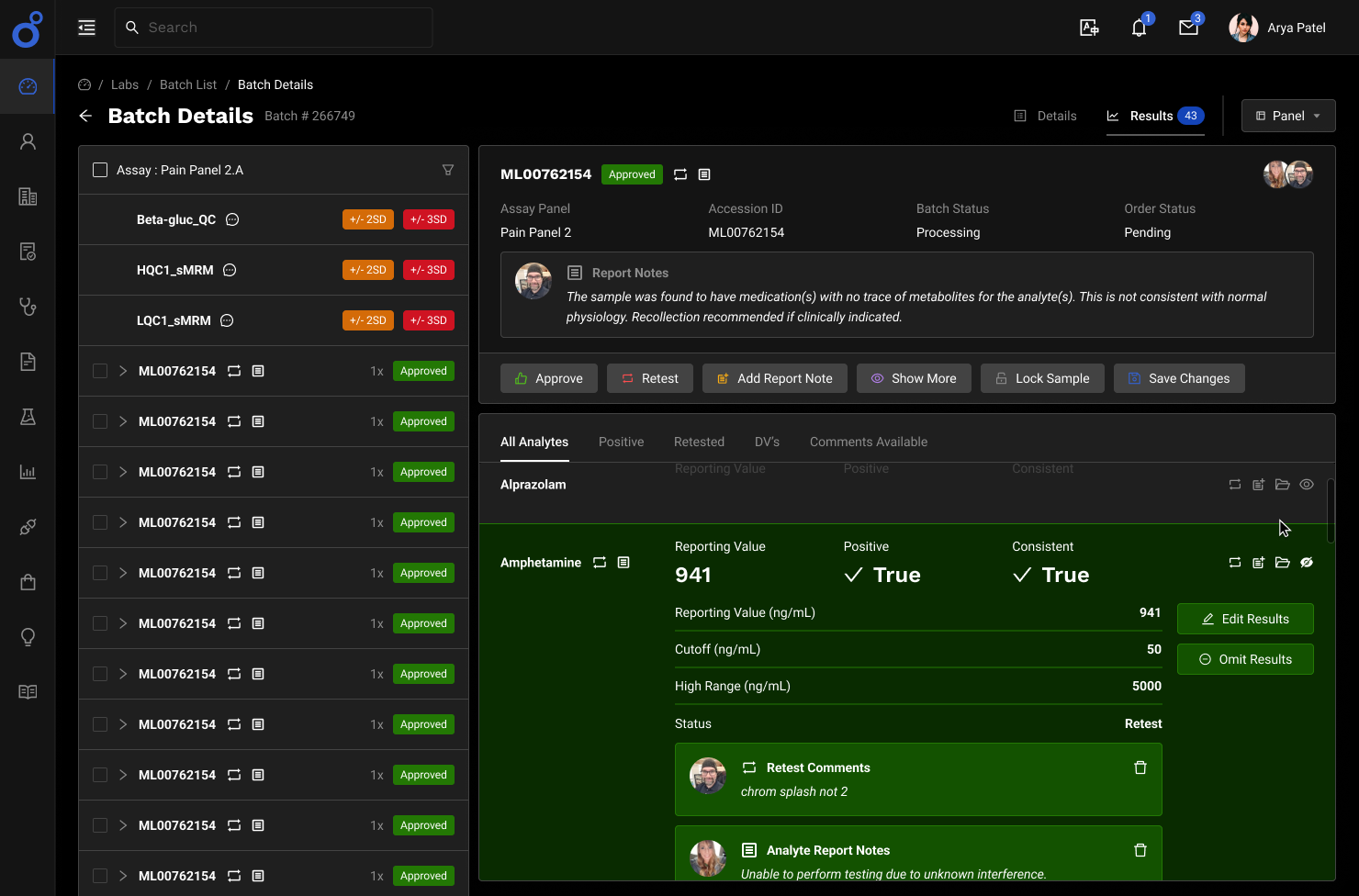
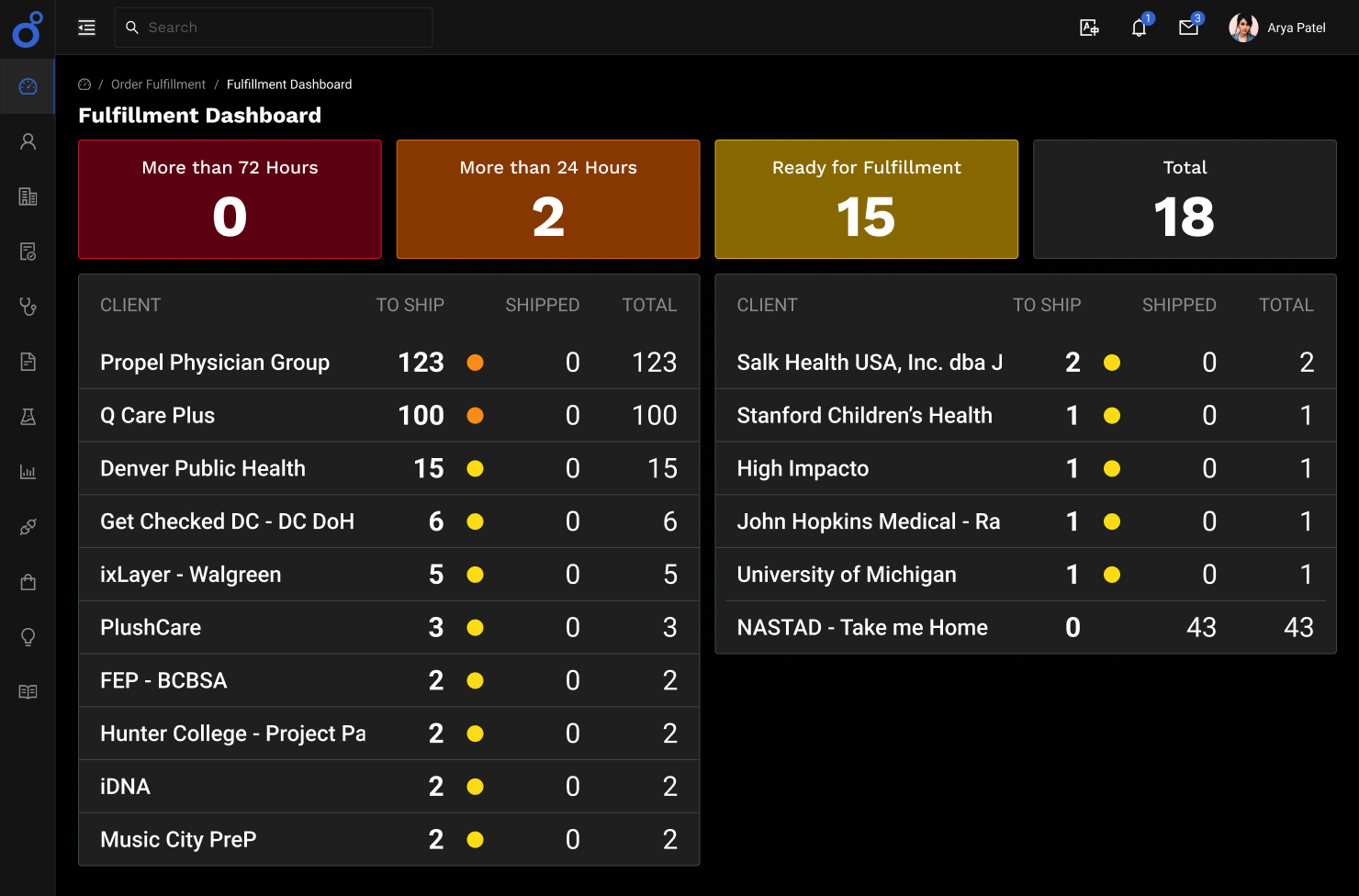
Molecular Testing Labs needed to replace an unstable legacy system that supported nearly every part of its laboratory operation. Rather than recreate the old experience, the team chose to rebuild from the ground up with new architecture and a stronger UX foundation. The work covered the full lab process, from accessioning and batch creation through testing, review, certification, dashboards, and day-to-day operational management.
My Role
I led UX across the engagement, from early discovery through launch. I traveled onsite multiple times to observe lab technicians and supervisors, interview users and stakeholders, and understand how work actually moved through the lab. I mapped workflows, documented requirements, created journey maps and personas, and produced artifacts that helped the product and development teams align around a shared vision for the new system.
As the product moved into delivery, I stayed closely involved with users and stakeholders to validate designs, refine requirements, and make sure the experience continued to reflect the real laboratory workflow. Later in the engagement, I also took on BA responsibilities, wrote stories in Azure DevOps, and helped lead a four-week UAT process before launch.
Approach
Because the system was being rebuilt from the ground up, I started with the physical operation rather than the interface. I spent time on the lab floor learning the sequence of work, handoffs, exceptions, and dependencies across accessioning, single and multi-batching, testing, review, certification, and other core processes.
The goal was not to force users into a generic software workflow. It was to make the digital experience feel like a natural extension of how the laboratory already operated. That understanding shaped the information architecture, workflows, dashboards, and high-fidelity designs.
I worked iteratively with users, stakeholders, and the delivery team throughout the project, using frequent reviews and feedback to keep the product aligned with real-world operations.
Outcome
The result was a new operational platform built around the laboratory's actual workflows rather than the limitations of the legacy system. It provided a more stable foundation and a unified experience for managing batches, instruments, testing, review, certification, and other core lab activities.
The process also gave the broader project team a shared understanding of how the lab worked, which helped guide requirements, development decisions, UAT, and launch.